
Discover hidden stories, legends, and details that make Prague unlike any other city
Prague is one of Europe’s most charming capitals. Its Gothic towers, cobblestone streets, colourful façades and romantic bridges attract millions of visitors every year. But behind the postcard-perfect views lies a world of unusual stories, forgotten legends, and surprising facts that rarely appear in school textbooks. In this article, we explore 10 fascinating facts about Prague that most people have never heard before. These stories will help you understand the city from a new perspective — and you can experience many of them on our guided walks, where local guides lead you beyond the typical tourist paths.
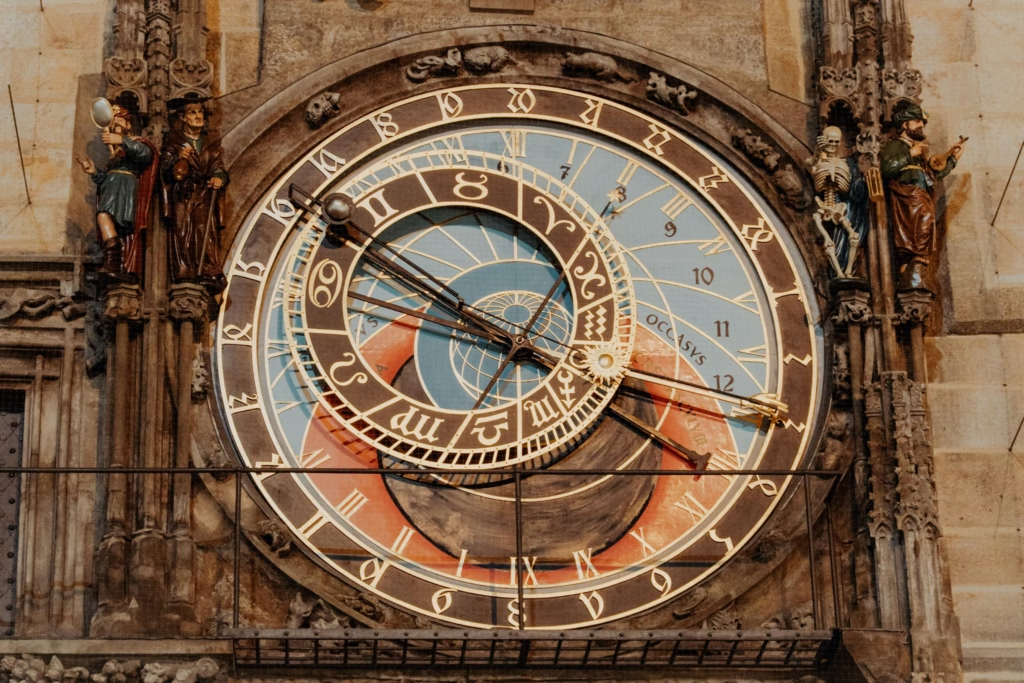
The Prague Astronomical Clock (Orloj) is one of the city’s most iconic attractions. It shows the position of the Sun and Moon, zodiac signs, astronomical time, and includes moving figures that appear every hour. But here’s the lesser-known part: in the 18th century, locals believed the clock could predict upcoming catastrophes. When the Orloj stopped working, people feared something terrible was coming — and shortly after, the city faced a period of famine. This strengthened the myth that the clock had supernatural powers. On our Highlights of Old Town & Jewish Ghetto Tour, you will hear more about these legends and learn how the clock truly works today.
Czech beer culture has deep roots — and there’s a practical historical reason for it. In medieval Prague, drinking water was often unsafe because the rivers and wells were polluted. Brewing beer required boiling the water, which made it safe to drink. As a result, even children drank low-alcohol beer daily. Beer was considered a nutritious, safe, and essential part of life.

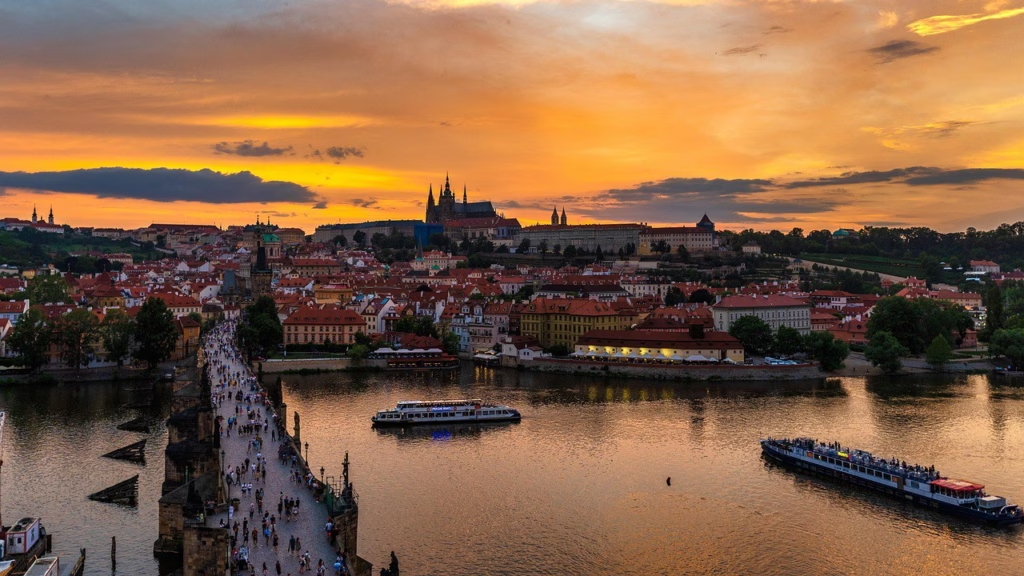
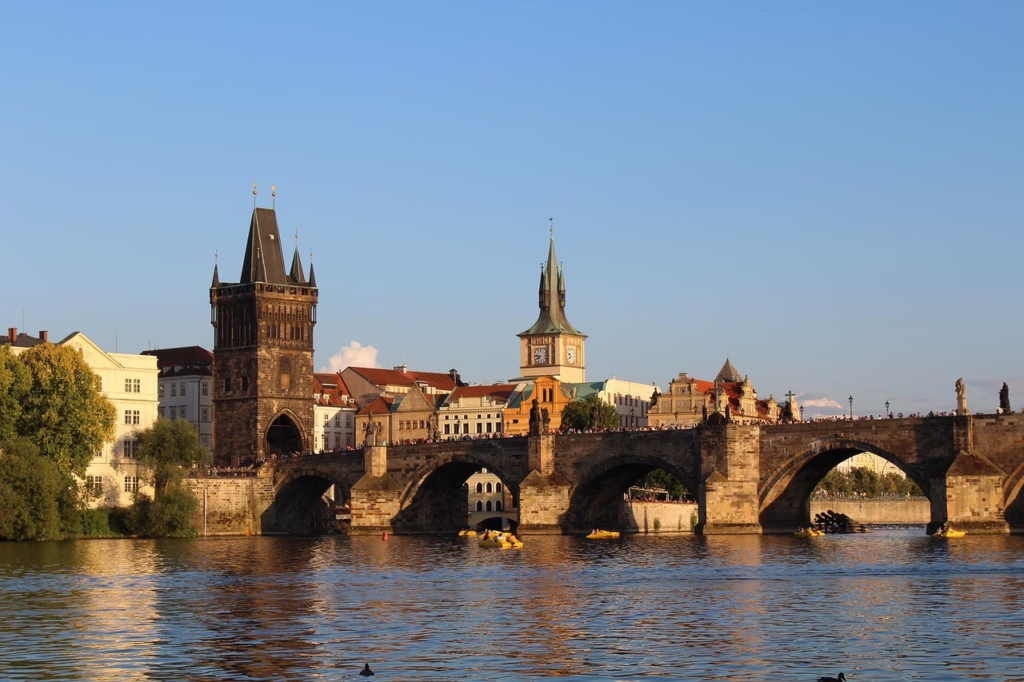
Charles Bridge wasn’t built randomly — the first stone was laid on 9 July 1357 at exactly 5:31 AM. This creates a unique numerical palindrome: 1 3 5 7 – 9 – 7 5 3 1 Emperor Charles IV believed strongly in astrology and numerology. He chose this date and hour because he considered the sequence lucky and believed it would bring stability to the bridge for centuries. Considering how many floods and wars the bridge has survived, he wasn’t wrong. You can learn more about this mysticism on our Prague Castle tour & Canal River Cruise, which explores the history and symbolism surrounding the most famous bridge in the city.
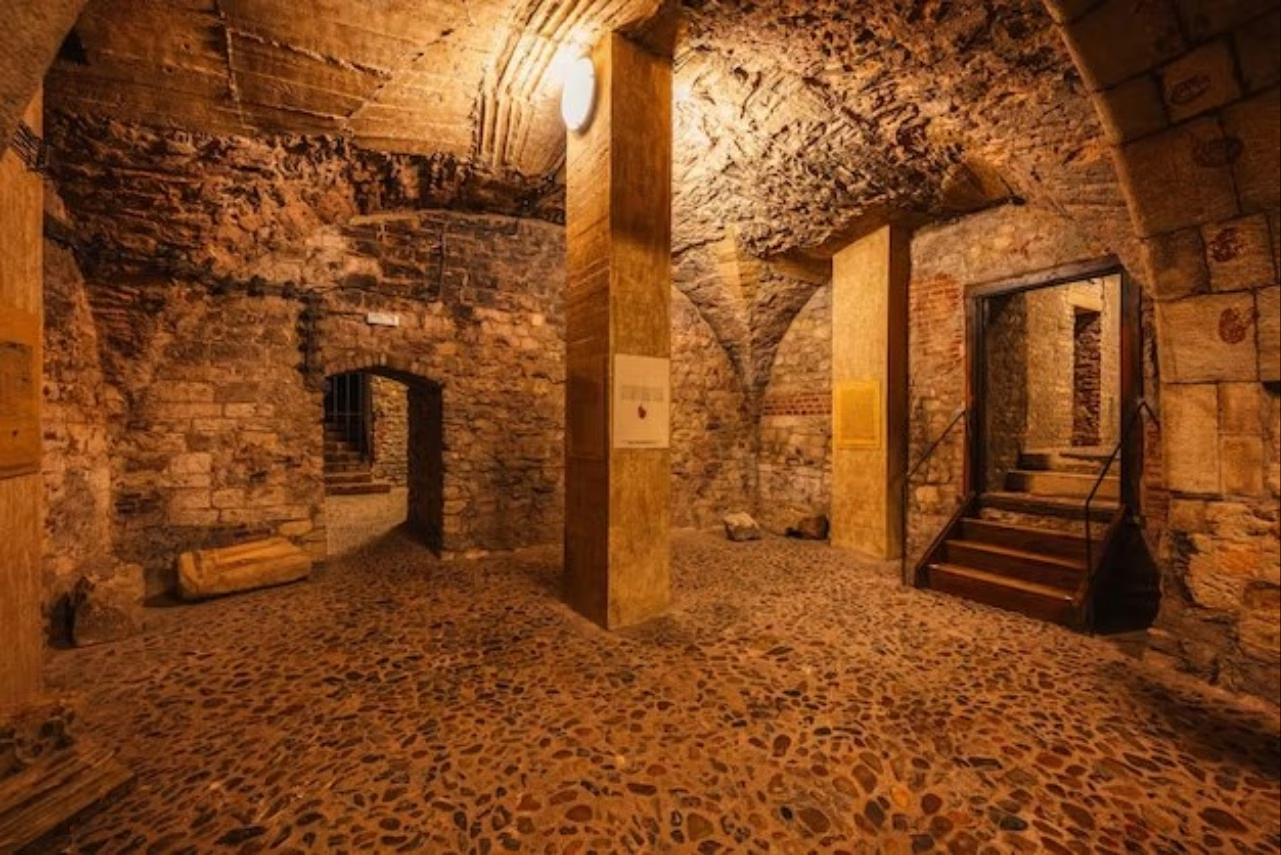
Most visitors never realize that parts of Prague’s Old Town are actually built on top of older streets and houses. During the Middle Ages, the Vltava River flooded so often that the city decided to raise the street level by several meters. As a result, many original rooms, passageways, cellars, and even entire street sections were buried underground — and still exist today. Some of these mysterious spaces can be visited on guided tours, and exploring them feels like stepping into a time capsule from 700 years ago.
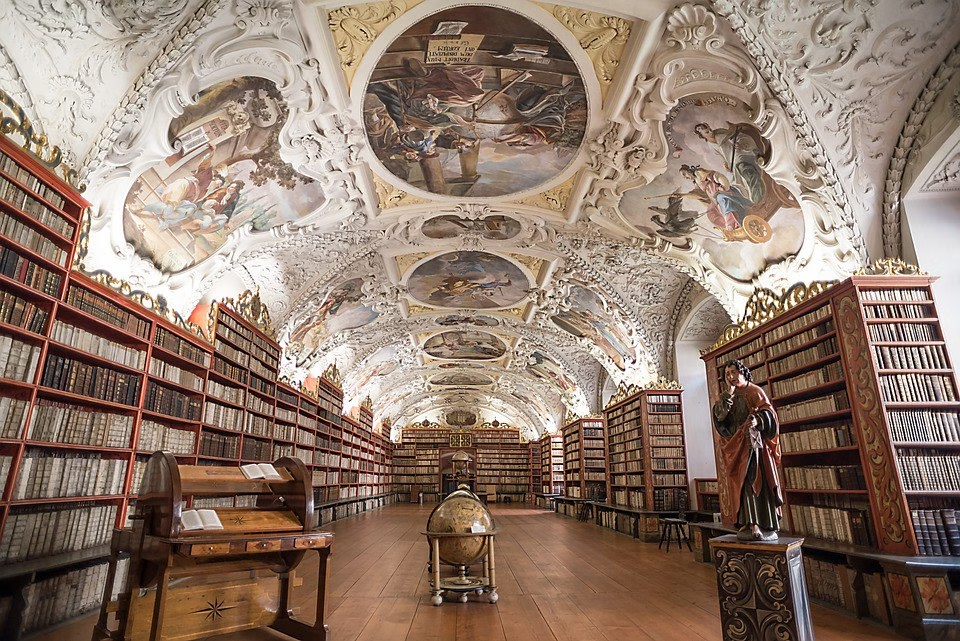
The Strahov Monastery Library is not only beautiful — it is also one of the oldest libraries in Europe still keeping its original manuscripts. Some of the books are more than 900 years old. An interesting detail most people don’t know: during times of censorship, Strahov monks secretly preserved forbidden literature. Thanks to them, many historical documents and philosophical works were saved from destruction.
Medieval executioners usually lived outside city walls because their profession was considered “unclean.” But in Prague, the official executioner Jan Mydlář lived much closer to the busy parts of town. His job involved more than executions: he cleaned streets, removed dead animals, and performed medical procedures nobody else wanted to attempt. On the Prague Ghosts & Legends Tour, you will hear some of the city’s darkest stories, including tales about Mydlář’s unusual life.

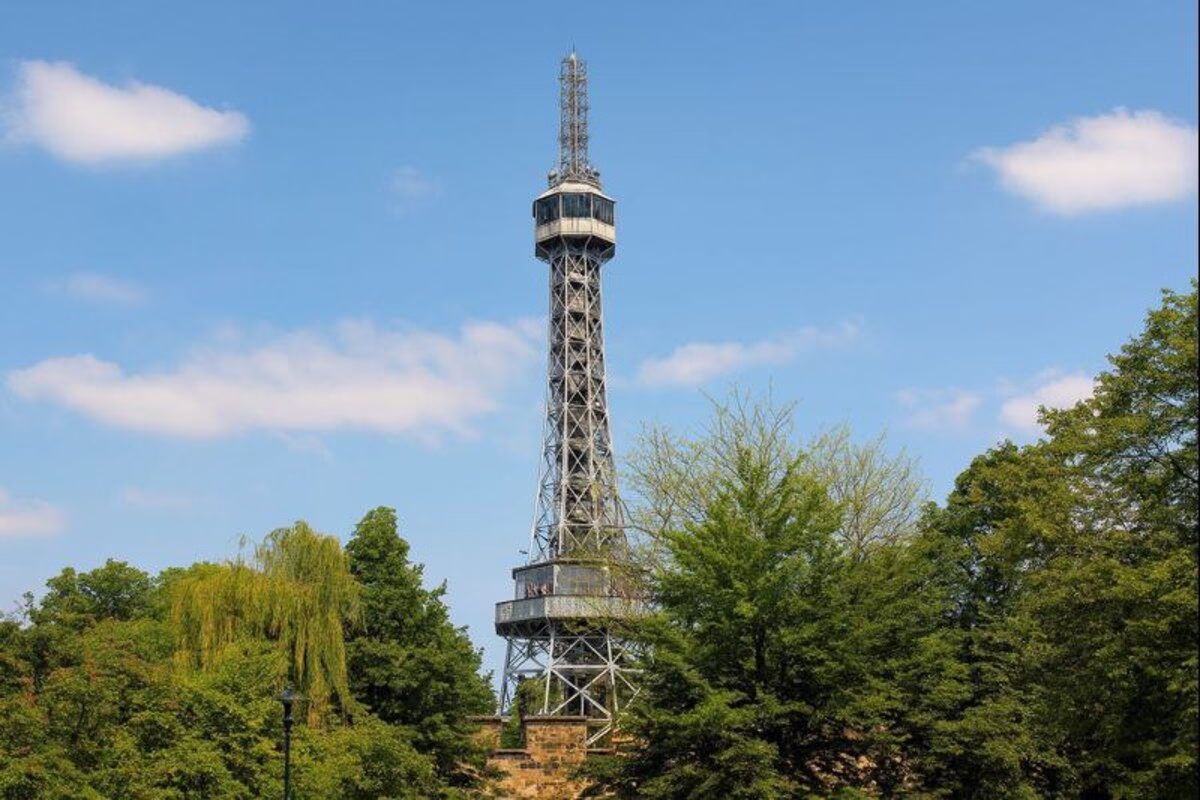
If you climb Petřín Hill, you’ll find the Petřín Lookout Tower, built in 1891 after Czech travellers visited the Paris World’s Fair and became inspired by the Eiffel Tower. Even though it is much smaller, the top of Petřín Tower stands at a similar altitude above sea level as the Eiffel Tower because of the hill’s height. Few visitors know that the tower was once used as a site for atmospheric and meteorological observations.
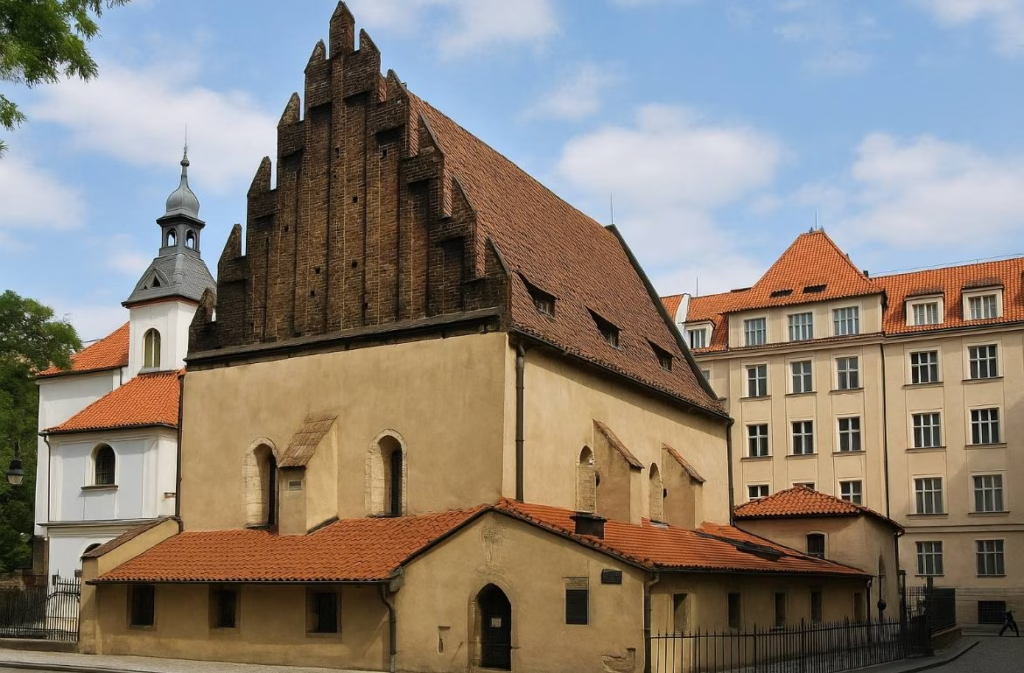
Built in 1270, the Old-New Synagogue is still in use today—making it one of the oldest continuously operating synagogues in Europe. It is also tied to one of Prague’s most famous legends: the story of the Golem, a clay creature created by Rabbi Loew to protect the Jewish community. According to the legend, the Golem still rests in the synagogue’s attic. Find out more about this legends on one of our tours: Alchemy & Mysteries of the Prague Castle tour.
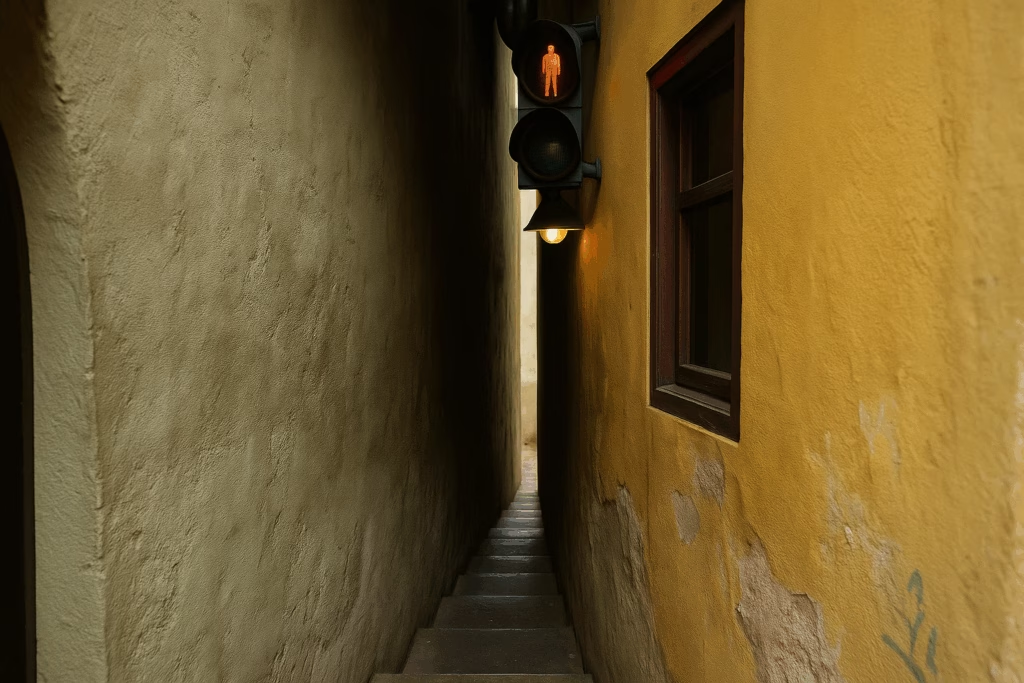
In the Lesser Town (Malá Strana), you’ll find a tiny alley only 50 centimeters wide. It’s so narrow that two people cannot pass each other — so the city installed a pedestrian traffic light.
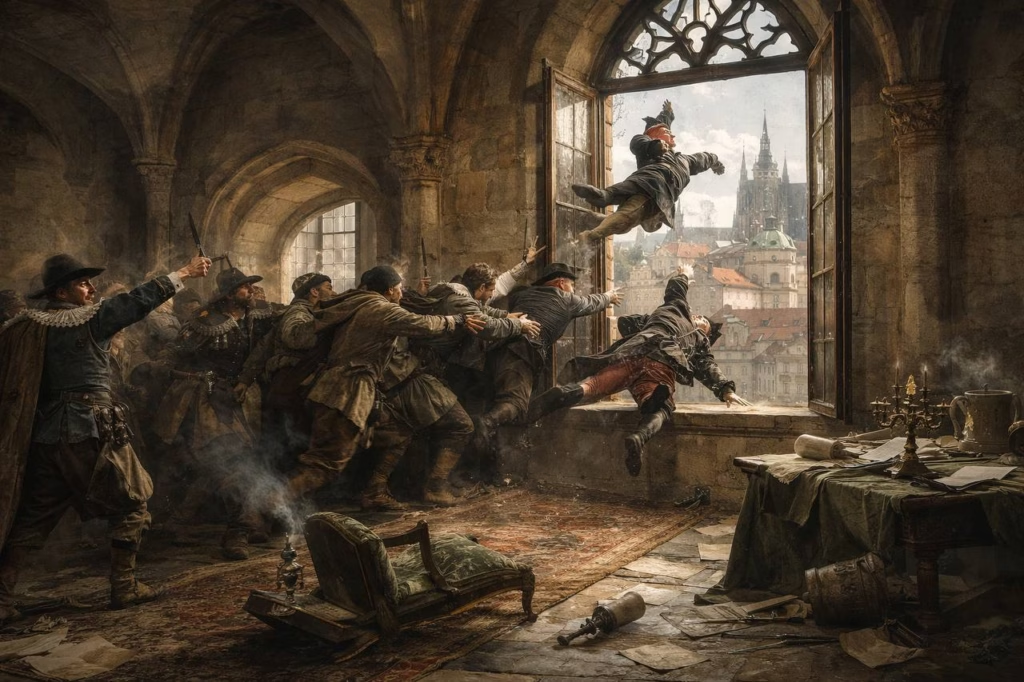
One of the most surprising stories about Prague is that a huge conflict — the Thirty Years’ War — began because a group of angry nobles threw two government officials out of a window at Prague Castle in 1618. The officials survived the fall (people still argue whether it was because of angels or a very lucky pile of manure), but the event shocked Europe and sparked a war that lasted three decades.
Ready to explore the real Prague? Book your next tour on McGee´s Trips Tickets and discover the stories that most visitors never hear.